

• Skip to main content
  • Skip to main navigation
Baylor University Baylor University
Institute for Faith and Learning
  • About
    • Staff
    • Frequently Asked Questions about IFL
    • Annual Report
    • Campus Impact
      • Dr. Bill Sterrett, Hale Endowed Chair of School Leadership
      • Dr. Elise King, Interim Chair, Department of Human Sciences & Design; Associate Professor
      • Dr. Holly Oxhandler, Professor, Associate Dean for Research, Diana R. Garland School of Social Work
      • Dr. Ian Gravagne, Professor and Associate Chair, Electrical & Computer Engineering
      • Dr. Jason Carter, Dean of the Robbins College of Health and Human Sciences
      • Dr. John Chen, Curtis Hankamer Chair in Entrepreneurship; Associate Professor
      • Dr. Larry Lyon, Vice Provost, Dean of the Graduate School
      • Dr. Min Y. Pack, Assistant Professor, Mechanical Engineering
      • Dr. Stephanie Clintonia Boddie, Fuller Family Endowed Chair for Social Justice; Associate Professor of Church and Community Ministries
      • Dr. Tom Hibbs, J. Newton Rayzor Sr. Professor of Philosophy and Dean Emeritus
      • Larry McDonald, Assistant AD for Football Recruiting
      • Miya Shimada, Crane Scholar, Junior Cohort
      • Stefanie Wheat-Johnson, Arts & Faith Chaplain, Spiritual Life
    • Connect with us
  • Conferences and Symposiums
    • Baylor Symposium on Faith and Culture
      • 2027 Entrusted: The Vocation of Christian Stewardship
      • 2026 Technology and the Human Person in the Age of AI
      • 2024 Renewing and Reimagining Institutions for the Common Good
      • 2023 Called Together in an Age of Discord
      • 2022 Art Seeking Understanding
      • 2021 Living Accountably
      • 2019 The Character of the University
      • 2018 Stewardship of Creation
      • 2017 The Bible and the Reformation
      • 2016 Higher Learning
      • 2015 The Spirit of Sports
      • 2014 Faith and Film
      • 2013 Kierkegaard: A Christian Thinker for Our Time?
      • 2012 Technology and Human Flourishing
      • 2011 Educating for Wisdom in the 21st Century University
      • 2010 Human Dignity and the Future of Health Care
      • 2009 Secularization and Revival
      • 2008 Bottom-Up Approaches to Global Poverty
      • 2007 Friendship
    • Bill and Roberta Bailey Family Lecture in Christian Ethics
      • Bailey Lecture Video Archive
    • Past Conferences and Events
      • Baylor Symposium on Nicaea: Creed, Culture, and Christendom (September 23-24, 2025)
      • IFL@25
      • 2019 LFP National Conference
      • Art & Soul
      • Pruit Memorial Symposium
      • Baylor University Medical Ethics Seminar
      • One-Time Conferences
  • Programs
    • Missio Discussion Groups for Faculty and Staff
      • Faculty Missio
      • Staff Missio
      • Online Missio
      • Nursing Missio
      • Interfaith Missio
      • Business, Economics, Theology, and Ethics Research Cohort
      • National Collaborative for Congregational Flourishing Fellows Program
    • Communio Retreat for Faculty and Staff
    • Crane Scholars Program for Undergraduates
      • Application Requirements
      • Program Activities
      • Media
    • Conyers Scholars Program for Graduate Students
    • Professio Mentoring Program for Faculty
      • Responsibilities for Mentees and Mentors
      • Eligibility and Recruitment Process
      • Professio Leaders
    • Chapel Leader Training Program for Faculty and Staff
    • Faith and Science Colloquium
    • Christian Scholars Fellowship for Graduate Students and Faculty
    • Vocare
  • Events
  • Media and Resources
    • Faith Animating Online Education
      • Starting Points
      • A Christian Imagination about Online Education?
      • Cultivating Character and Online Learning
      • Additional Resources
    • Institute for Faith and Learning Video Archive
    • Recommended Reading
    • External Resources
    • The Christian Reflection Project
      • Acedia
      • Advent Ethics
      • Aging
      • Anger
      • Apocalyptic Vision
      • Attentive Patience
      • The Book of Acts
      • Caring for Creation
      • Catechism
      • Chastity
      • Children
      • Christianity and Islam
      • Christmas and Epiphany
      • Cities and Towns
      • Cloning
      • Consumerism
      • Death
      • Disability
      • Easter
      • Food and Hunger
      • Forgiveness
      • Freedom
      • Friendship
      • Gambling Culture
      • Generosity
      • Global Wealth
      • Health
      • Heaven and Hell
      • Hospitality
      • Immigration
      • Inklings of Glory
      • Lent
      • The Letter of James
      • Marriage
      • Membership
      • Monasticism Old and New
      • Moral Landscape of Creation
      • Mysticism
      • Parables
      • Patterns of Violence
      • Peace and War
      • Pentecost
      • Pornographic Culture
      • Prayer
      • Prison
      • Prophetic Ethics
      • Racism
      • Sabbath
      • Schools in a Pluralist Culture
      • Scripture
      • Sermon on the Mount
      • Singing Our Lives
      • Sports
      • Suffering
      • Traveling Well
      • Virtual Lives
      • Vocation
      • Where Wisdom Is Found
      • Women and the Church
      • Women in the Bible
      • Work
    • Reflections on Faith and Higher Education
  • Giving
Baylor BU Institute for Faith and Learning Media and Resources Reflections on Faith and Higher Education
  • Faith Animating Online Education
  • Institute for Faith and Learning Video Archive
  • Recommended Reading
  • External Resources
  • The Christian Reflection Project
  • Reflections on Faith and Higher Education

Reflections on Faith and Higher Education
ifl_2_color_stacked.png

Reflections from The Reverend Henry Carter Finch, S.T.L.
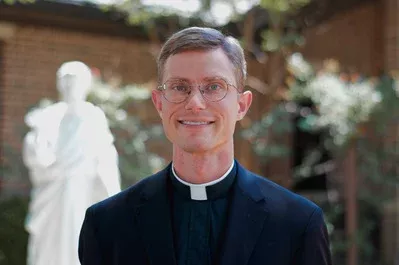
The Rev. Henry Carter Finch, S.T.L.

Missa Votiva de Spiritu Sancto

2 Thes 3:6-10, 16-18

Ps 128:1-2, 4-5

Mt 23:27-32

In one of the retreat conferences he presented to the Holy Father and the curia this past Lent, Bishop Erik Varden reflected on learning and freedom. He took as his inspiration part of a rather lengthy sermon on Psalm 91 preached by the great Cistercian abbot St. Bernard of Clairvaux, in particular this verse: “For he has freed me from the snare of the hunters and from the bitter word.” In deliciously vivid language that I will merely summarize, Bernard suggests that it’s hard to stomach the truth that in the eyes of this verse, we humans are not hunters…we are the hunted…like common animals…beasts…simple beasts who are easily lured into traps, even the same old snares of sin and vice over and over again, despite knowing what they are and what little they offer. Bernard suggests this is proof we aren’t quite as free as we usually like to think we are…we are rather “unfree”; incapable on our own of making steady progress towards our life’s true goal, drawn instead to all manner of obfuscation and distraction. The Second Vatican Council describes this same phenomenon as “unsteadiness,” and it is an effective of the fall. Commenting on Bernard, Bishop Varden writes, “The task before us is twofold: 1) first to develop a lucid understanding of the hunters who are out to ensnare us; then 2) to seek a cure for our wretched self-enthrallment.”

It is Bernard’s proposed “cure” that I would suggest is of interest to us as we embark upon a new academic year, invoking the blessing and guidance of the Holy Spirit. You see, Bernard suggests that we remain susceptible to the ensnaring tactics of the hunters of sin out to trap us “as long as we remain “rudes.” Now we tend to more or less transliterate this Latin word into English as “rude,” which these days suggests either meanness, usually expressed curtly and verbally (you know, in the vein of “That was rude!”)…or as a synonym for “uncouth,” a word frequently deployed by my grandmother to describe the ill-bred manners of youth. To be uncouth is to be impolite, of poor manners…you know, to burp at the table, or to slurp soup, or clatter your spoon noisily. However, Bernard means something else by “rudes.” Bishop Varden explains, “Bernard’s concern, however, is not with table manners. In Latin, rudes is an earthy word connected with the soil. It means untilled. Land that is ‘rudes’ is like that hard soil on which the Sower sowed seed that sprang up at once, then perished, for it had not much soil…[it wasn’t plowed; it was shallow and hard; it wasn’t ready to receive seed – my words]. For the seed to have a chance, the farmer must first prepare the ground: plough and harrow it, then walk up and down it, furrow after furrow, picking up and throwing away every last stone.” When applied to the soul, this time-consuming, back-breaking labor is what we call erudition.

Now, these days erudition has come to be synonymous with “intelligence.” To say that someone is a man of “erudition” is to suggest that he is a man of great intelligence, or great learning – a smart person. But for Bernard – and I suspect for the medieval tradition of scholarship more broadly, erudition had less to do with how much one knows and far more to do with one’s commitment to the work – the task - the ploughing of the mind, that is learning…and most importantly the character formation that accompanies it. For Bernard, learning is a task not unlike the agricultural tasks of the farmer. Learning is an embodied process, involving toil and exertion, like farming. Like soil, the mind needs to be ploughed. The mind needs to be tilled and its soil quality improved by removing rocks and rubbish. Fresh seeds need to be sown. Weeds need to be pulled. Sprouts need to be carefully watered and fertilized and so on. These are the tasks that produce the harvest of wisdom both theoretical and practical, that grow not only the mind…but our character as well. This approach to learning is an approach that recognizes learning isn’t merely about amassing information. It’s about the formation of the whole person in freedom, responsibility, virtue, and therefore holiness. It’s about character development. Viewed in this way, learning ought to be a never-ending process, one that is repetitive and cyclical so that the mind never becomes either infertile and unproductive or a mere repository of data.

The modern approach to education tends to view education less as cultivation and more as formatting, using the technical language of programming rather than organic imagery. This is nowhere more apparent than in those questions students love and teachers hate: “but what’s going to be on the test?” The mentality that stands behind this question is this: “Just download for me the data I need to vomit forth when asked to do so.” Bishop Varden put it this way in a commencement address back in May. “Nowadays there is a tendency to think of universities as degree-factories. People sign up for courses they are not terribly interested in. They follow lectures online while doing their ironing, produce a few written assignments with the discreet collaboration of ChatGPT, then emerge with a hood and an acronym after their name, hoping to further their career and salary prospects. There is nothing wrong about this in the sense that it is morally culpable. But this approach is hardly likely to generate intellectual joy, intellectual freedom.” There is no toil, no tillage, no formation of the mind here. Formatting and downloading are not embodied processes. They are not human processes. They are not respectful of freedom; and, even as they fail to form the mind, they also fail to form the conscience in principles of right reason; they fail to cultivate wisdom, and they do very little to improve character.

My challenge to all of us – faculty and students – at the beginning of a new academic year is to make this year an erudite year. Insofar as erudition is an aspect of growing in holiness, it ought to shape and form our intellectual endeavors. Erudition is about preventing our minds from petrifying. Bishop Varden again, “There is stone-picking to be done as well as digging and manuring. The Church uses human, concrete imagery redolent of sweat and soil and sun to describe intellectual awakening…this embodied, Catholic approach is encouraging and joyful.” The result of this genuine education, erudition, is, in the words of Cardinal Newman, the perfection of the intellect. Newman describes this perfection in his Idea of a University in poignant words. It is “the clear, calm, accurate vision and comprehension of all things, as far as the finite mind can embrace them, each in its place, and with its own characteristics upon it. It is almost prophetic from its knowledge of history; it is almost heart-searching from its knowledge of human nature; it is almost supernatural clarity from its freedom from littleness and prejudice; it has almost the repose of faith, because nothing can startle it; it has almost the beauty and harmony of heavenly contemplation, so intimate is it with the eternal order of things and the music of the spheres.” That is true erudition…genuine learning…and we ought to commit not only to its pursuit but to awakening the desire for it in others. That is, especially, the vocation of the Catholic educator, and it is an expression of charity.

You see, the erudite Christian – the one who has been formed according to that intellectual perfection described by Newman – the erudite Christian is able to step into the modern mission field as a charitably ordering presence, of noble character, keenly attuned to the divine ordering of things.

At the beginning of a new academic year, we invoke the Holy Spirit’s blessing on this endeavor and seek His aid as the one who alone is able to attune us to the music of the spheres, who attunes us to the divine order in all of creation. Again, Bishop Varden: “To hear the music of the spheres is to note the cantus firmus voiced in all creation: in the helix of DNA as well as in the galaxies above. The music is that of God’s Creator Word singing itself as praise to the Father through the Spirit. It resonates, too, in the heart and mind of Christians washed clean in the Blood of the Lamb.” 

We invoke the Holy Spirit’s guidance and blessing at the beginning of this new academic year as the source of all true wisdom and knowledge, the One who orders all our intellectual endeavors to the higher things, the One who transforms environments of learning into fields of witness, and the One who enlivens all our learning with the warm and bright burning flame of perfect charity such that in all things we not only come to know God but also to love Him…to be overcome with the passionate desire to become His instrument, echoing with the ordered harmony and beautiful melody which uplift and edify weary hearts and droopy minds, instilling the clarity of hope and the true gladness found in life with Christ.

26 August 2026

The Rev. Henry Carter Finch, S.T.L.

Given at St. Peter Catholic Student Center, #1633

St. Thomas Aquinas and St. Norbert, pray for us.

Institute for Faith and Learning

Brooks Residential College Offices 157-165

One Bear Place #97270
Waco, TX 76798-7270

ifl@baylor.edu
(254) 710-4805
Crane Scholars Program
The Baylor Symposium on Faith and Culture
Missio
Communio
The Christian Reflection Project
Media and Resources
Make a Gift
Baylor BU Institute for Faith and Learning Media and Resources Reflections on Faith and Higher Education
  • About
    Back
    • Staff
    • Frequently Asked Questions about IFL
    • Annual Report
    • Campus Impact
      Back
      • Dr. Bill Sterrett, Hale Endowed Chair of School Leadership
      • Dr. Elise King, Interim Chair, Department of Human Sciences & Design; Associate Professor
      • Dr. Holly Oxhandler, Professor, Associate Dean for Research, Diana R. Garland School of Social Work
        Back
        • Faith and Learning at Baylor
      • Dr. Ian Gravagne, Professor and Associate Chair, Electrical & Computer Engineering
      • Dr. Jason Carter, Dean of the Robbins College of Health and Human Sciences
      • Dr. John Chen, Curtis Hankamer Chair in Entrepreneurship; Associate Professor
      • Dr. Larry Lyon, Vice Provost, Dean of the Graduate School
      • Dr. Min Y. Pack, Assistant Professor, Mechanical Engineering
      • Dr. Stephanie Clintonia Boddie, Fuller Family Endowed Chair for Social Justice; Associate Professor of Church and Community Ministries
      • Dr. Tom Hibbs, J. Newton Rayzor Sr. Professor of Philosophy and Dean Emeritus
      • Larry McDonald, Assistant AD for Football Recruiting
      • Miya Shimada, Crane Scholar, Junior Cohort
      • Stefanie Wheat-Johnson, Arts & Faith Chaplain, Spiritual Life
    • Connect with us
  • Conferences and Symposiums
    Back
    • Baylor Symposium on Faith and Culture
      Back
      • 2027 Entrusted: The Vocation of Christian Stewardship
        Back
        • Invited Speakers
        • Parking Information
        • Registration
        • Schedule
        • Travel Information
      • 2026 Technology and the Human Person in the Age of AI
        Back
        • Schedule
          Back
          • Locating Relevant Symposium Sections
        • Key Information and Frequently Asked Questions
        • Invited Speakers
        • Symposium Highlights & Impact
      • 2024 Renewing and Reimagining Institutions for the Common Good
        Back
        • Conference Schedule
        • Invited Speakers
        • Photos and Video
        • Conference Volume
      • 2023 Called Together in an Age of Discord
        Back
        • Travel Information
        • Conference Schedule
        • Featured Speakers
      • 2022 Art Seeking Understanding
        Back
        • Conference Schedule
        • Plenary and Featured Speakers
      • 2021 Living Accountably
        Back
        • Plenary and Featured Speakers
        • Video Archive
      • 2019 The Character of the University
        Back
        • Plenary and Featured Speakers
        • Video Archive
      • 2018 Stewardship of Creation
        Back
        • Featured Speakers
        • Video Archive
      • 2017 The Bible and the Reformation
        Back
        • Co-Sponsors
        • Featured Speakers and Panels
        • Video Archive
      • 2016 Higher Learning
        Back
        • Featured Speakers and Panels
        • Video Archive
      • 2015 The Spirit of Sports
        Back
        • Featured Speakers
        • Video Archive
      • 2014 Faith and Film
        Back
        • Video Archive
      • 2013 Kierkegaard: A Christian Thinker for Our Time?
        Back
        • Featured Speakers
        • Video Archive
      • 2012 Technology and Human Flourishing
        Back
        • Featured Speakers
        • Video Archive
      • 2011 Educating for Wisdom in the 21st Century University
        Back
        • Featured Speakers
        • Video Archive
      • 2010 Human Dignity and the Future of Health Care
        Back
        • Featured Speakers
        • Video Archive
      • 2009 Secularization and Revival
        Back
        • Video Archive
      • 2008 Bottom-Up Approaches to Global Poverty
      • 2007 Friendship
    • Bill and Roberta Bailey Family Lecture in Christian Ethics
      Back
      • Bailey Lecture Video Archive
    • Past Conferences and Events
      Back
      • Baylor Symposium on Nicaea: Creed, Culture, and Christendom (September 23-24, 2025)
      • IFL@25
        Back
        • Select Pictures from IFL@25
      • 2019 LFP National Conference
        Back
        • Presenters
      • Art & Soul
      • Pruit Memorial Symposium
        Back
        • 2001 Celebrating Augustine's Confessions
        • 2002 Christianity and Economics
        • 2003 The Schooled Heart
        • 2004 Slavery, Oppression, and Prejudice
        • 2005 Global Christianity
      • Baylor University Medical Ethics Seminar
        Back
        • 2016 Medical Ethics Seminar
        • 2017 Medical Ethics Seminar
        • 2018 Medical Ethics Seminar
      • One-Time Conferences
  • Programs
    Back
    • Missio Discussion Groups for Faculty and Staff
      Back
      • Faculty Missio
      • Staff Missio
      • Online Missio
      • Nursing Missio
      • Interfaith Missio
      • Business, Economics, Theology, and Ethics Research Cohort
      • National Collaborative for Congregational Flourishing Fellows Program
    • Communio Retreat for Faculty and Staff
    • Crane Scholars Program for Undergraduates
      Back
      • Application Requirements
      • Program Activities
      • Media
    • Conyers Scholars Program for Graduate Students
    • Professio Mentoring Program for Faculty
      Back
      • Responsibilities for Mentees and Mentors
      • Eligibility and Recruitment Process
      • Professio Leaders
    • Chapel Leader Training Program for Faculty and Staff
    • Faith and Science Colloquium
    • Christian Scholars Fellowship for Graduate Students and Faculty
    • Vocare
  • Events
  • Media and Resources
    Back
    • Faith Animating Online Education
      Back
      • Starting Points
      • A Christian Imagination about Online Education?
      • Cultivating Character and Online Learning
      • Additional Resources
    • Institute for Faith and Learning Video Archive
    • Recommended Reading
    • External Resources
    • The Christian Reflection Project
      Back
      • Acedia
      • Advent Ethics
      • Aging
      • Anger
      • Apocalyptic Vision
      • Attentive Patience
      • The Book of Acts
      • Caring for Creation
      • Catechism
      • Chastity
      • Children
      • Christianity and Islam
      • Christmas and Epiphany
      • Cities and Towns
      • Cloning
      • Consumerism
      • Death
      • Disability
      • Easter
      • Food and Hunger
      • Forgiveness
      • Freedom
      • Friendship
      • Gambling Culture
      • Generosity
      • Global Wealth
      • Health
      • Heaven and Hell
      • Hospitality
      • Immigration
      • Inklings of Glory
      • Lent
      • The Letter of James
      • Marriage
      • Membership
      • Monasticism Old and New
      • Moral Landscape of Creation
      • Mysticism
      • Parables
      • Patterns of Violence
      • Peace and War
      • Pentecost
      • Pornographic Culture
      • Prayer
      • Prison
      • Prophetic Ethics
      • Racism
      • Sabbath
      • Schools in a Pluralist Culture
      • Scripture
      • Sermon on the Mount
      • Singing Our Lives
      • Sports
      • Suffering
      • Traveling Well
      • Virtual Lives
      • Vocation
      • Where Wisdom Is Found
      • Women and the Church
      • Women in the Bible
      • Work
    • Reflections on Faith and Higher Education
  • Giving
  • General Information
  • Academics & Research
  • Administration
  • Admissions
  • Gateways for ...
  • About Baylor
  • Athletics
  • Ask Baylor
  • Bookstore
  • Calendar
  • Campus Map
  • Directory
  • Give to Baylor
  • News
  • Search
  • Social Media
  • Strategic Plan
  • College of Arts & Sciences
  • Diana R. Garland School of Social Work
  • George W. Truett Theological Seminary
  • Graduate School
  • Hankamer School of Business
  • Honors College
  • Law School
  • Louise Herrington School of Nursing
  • Moody School of Education
  • Research at Baylor University
  • Robbins College of Health and Human Sciences
  • School of Engineering & Computer Science
  • School of Music
  • University Libraries, Museums, and the Press
  • More Academics
  • Athletics
  • Compliance, Risk and Safety
  • Human Resources
  • Marketing and Communications
  • Office of General Counsel
  • Office of the President
  • Office of the Provost
  • Operations, Finance & Administration
  • Senior Administration
  • Student Life
  • University Advancement
  • Undergraduate Admissions
  • goBAYLOR
  • Graduate Admissions
  • Baylor Law School Admissions
  • Social Work Graduate Programs
  • George W. Truett Theological Seminary Admissions
  • Online Graduate Professional Education
  • Virtual Tour
  • Visit Campus
  • Alumni & Friends
  • Faculty & Staff
  • Online Graduate Professional Education
  • Parents
  • Prospective Faculty & Staff
  • Prospective Students
  • Students
  • Anonymous Reporting
  • Annual Fire Safety and Security Notice
  • Cost of Attendance
  • Digital Privacy
  • Legal Disclosures
  • Mental Health Resources
  • Notice of Non-Discrimination
  • Report It
  • Title IX
  • Web Accessibility
 
Baylor University
Copyright © Baylor® University. All rights reserved.
Baylor University • Waco, Texas 76798 • 1-800-229-5678